Guide · 6 min read
Mulch vs. Decorative Rock for Marco Island Landscapes
An honest comparison of the two most common bed finishes and how to decide which fits each area.
The material covering your landscape beds has a big effect on how the property looks and how much work it takes to keep it looking that way. On Marco Island, the two most common choices are organic mulch and decorative rock. Neither is right everywhere, and many well-kept properties use both.
What mulch does well
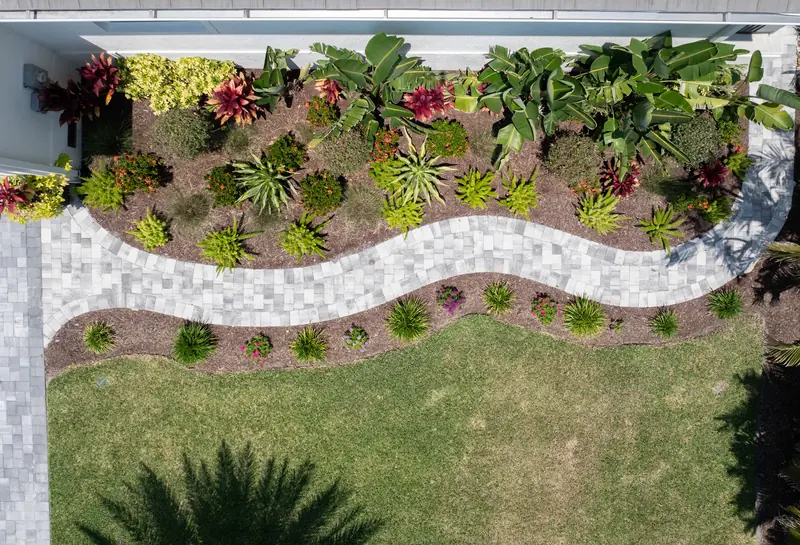
Organic mulch — shredded wood or bark products in natural or colored tones — gives beds a soft, finished look that suits lush tropical planting.
- It helps moderate soil conditions. A mulch layer can help reduce moisture loss from the soil surface and buffer soil temperatures.
- It breaks down over time. As it decomposes, organic mulch adds organic matter to the soil, which can be helpful in sandy soils.
- It is easy to adjust. Adding plants, moving plants or changing bed shapes is simpler in mulched beds.
The trade-offs of mulch
- It fades and breaks down, so it needs refreshing periodically.
- Heavy summer rain can wash lighter mulch out of beds and onto hardscape.
- Piled too deep or against stems and trunks, it can hold excess moisture.
What decorative rock does well
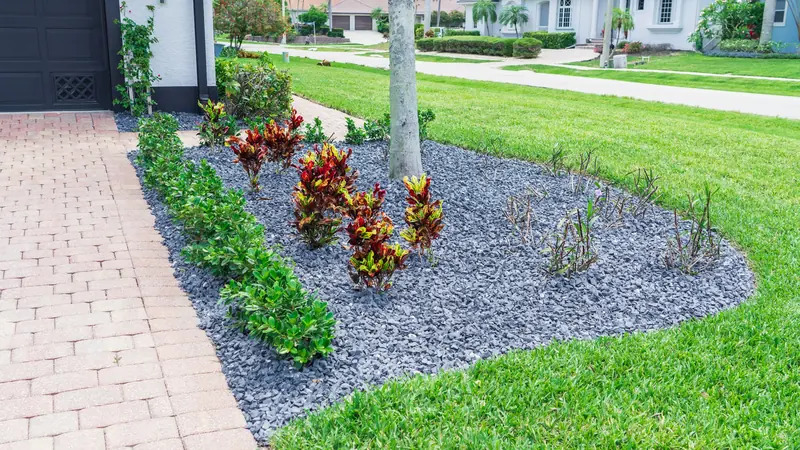
Decorative rock — from river rock to crushed stone in gray, white or natural colors — gives beds a cleaner, more architectural finish that pairs well with modern coastal homes and pavers.
- It does not break down like mulch. It holds its color and does not need regular top-ups in the same way.
- It stays put in rain. Heavier material is less likely to wash out during downpours.
- It defines edges crisply. Rock works well along foundations, near pool decks and beside walkways and driveways.
The trade-offs of rock
- Rock in full sun can absorb and radiate heat, which may stress some plants nearby.
- Leaves, palm debris and sand settle into rock and can be harder to clean out than from mulch.
- It is not maintenance-free — weeds can still appear, especially as debris builds up.
- Changing plants or bed shapes later takes more effort.
- It does not add organic matter to the soil.
Where each tends to fit on a Marco Island property
Mulch often suits
- Large mixed beds with shrubs, groundcovers and tropical accent plants.
- Areas where you expect to add or swap plants over time.
- Shadier side yards and beds beneath palms or trees.
Rock often suits
- Narrow strips along the foundation or between hardscape.
- Areas near pools and lanais where you want a cleaner surface.
- Beds with tough, sun-tolerant plants and sparse, deliberate planting.
- Spots where washed-out mulch has been a recurring problem.
Questions to help you decide
- How much time do you want to spend on bed upkeep?
- Do you want a lush, natural look or a crisp, modern one?
- How much direct sun does the bed get, and what is planted there?
- Does water move across the bed during heavy rain?
- Are you likely to change the planting in the next few years?
- Do your community's guidelines say anything about bed materials?
Combining both
Using both materials can be the most practical answer: rock in the hot, narrow, hardscape-adjacent strips and mulch in the larger planting beds. Keeping colors coordinated — for example, gray rock with a dark mulch, or natural tones together — helps the property read as one design.
Installation details that matter
Whichever material you choose, a few details make a noticeable difference:
- Clean, defined edges between lawn and bed.
- Removing weeds and excess old material before installing new material.
- Keeping material pulled back from plant stems, palm trunks and the house.
- For rock, deciding whether a landscape fabric or barrier is appropriate for that location.
If you are ready to refresh your beds, our mulch and decorative rock service covers preparation, edging and installation. Ongoing maintenance keeps either material looking its best.