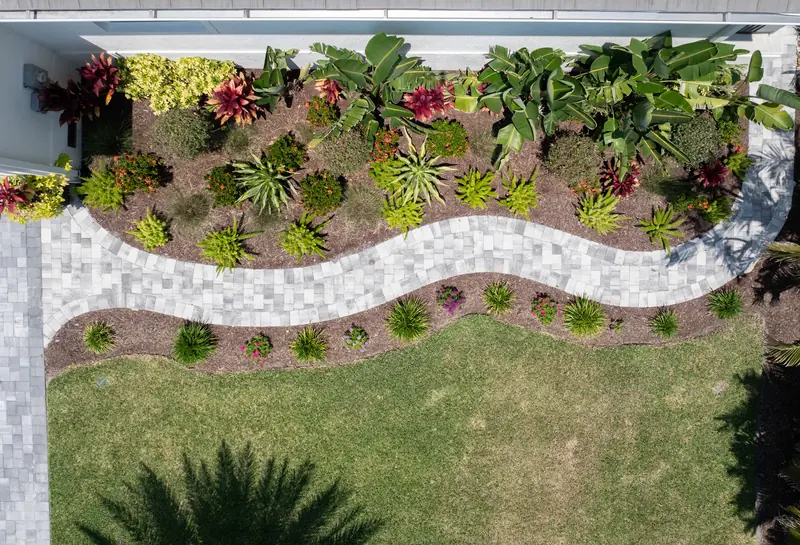
Guide · 7 min read
What to Consider When Choosing Plants for a Coastal Florida Yard
The site conditions and practical questions that matter most before you pick a single plant.
Walk through a garden center in Southwest Florida and almost everything looks appealing. The challenge is choosing plants that will still look good in your yard after a summer of heat and heavy rain, a dry winter and the occasional storm. This guide focuses on the questions to ask before choosing — not a fixed plant list, since the right answer depends on your property.
1. Understand the light in each spot
Light is usually the first filter. A plant labeled for full sun may struggle in a shaded side yard, and a shade-loving plant can scorch in an open front yard.
- Note how many hours of direct sun each bed receives, and when.
- Afternoon sun is typically hotter and harsher than morning sun.
- Light reflected from white walls, water, pavers and pool decks can intensify conditions.
- Light changes as nearby trees and palms grow.
2. Think about salt and wind exposure
On a coastal property, salt exposure is not uniform. Beds facing open water or prevailing winds may receive salt spray, while a courtyard on the other side of the house may receive very little.
Plant references often rate salt tolerance. It is worth checking those ratings for beds with direct exposure and saving less tolerant plants for protected areas. Local resources such as the University of Florida IFAS Extension publish guidance on plant selection for Florida conditions.
3. Work with sandy soil
Many Marco Island yards have sandy soil that drains quickly and holds fewer nutrients than heavier soils. That affects plant choices and care:
- New plantings may need more frequent watering while they establish.
- Plants suited to well-drained soil generally adapt more easily than those that prefer consistently moist ground.
- Mulch and soil preparation can help, but they do not change the underlying soil type.
4. Plan for rain and drainage
Summer rain can be intense. Low spots that stay wet after storms are poor places for plants that dislike wet roots, while higher, faster-draining areas may dry out quickly between rains. Observing where water flows and collects will help you place plants where they are most likely to succeed.
5. Choose for mature size
One of the most common landscape problems is a plant that is simply too big for its spot. In a warm climate, many shrubs and palms grow quickly.
- Check the expected mature height and width before buying.
- Leave room between plants and walls, windows, walkways, driveways and equipment.
- Choosing a plant that naturally stays at the size you want is usually easier than pruning a larger plant to fit.
Overgrown hedges and foundation shrubs often lead homeowners to hedge trimming and pruning or eventually to replacement.
6. Group plants by water needs
Placing plants with similar water needs together makes irrigation more efficient and reduces the chance of overwatering some plants while underwatering others. It also makes it easier to follow local watering rules.
7. Consider upkeep honestly
Every plant needs some care. Before choosing, ask:
- How often will it need shaping or trimming to look its best?
- Does it drop leaves, flowers, fronds or fruit onto walkways or pool areas?
- Is it prone to pests or problems in this region?
- Who will care for it when you are away?
8. Avoid invasive plants
Some plants that were once common in Florida landscapes are now recognized as invasive and can spread into natural areas. Florida agencies and the UF/IFAS Assessment of Non-Native Plants are useful references for checking a plant before you install it.
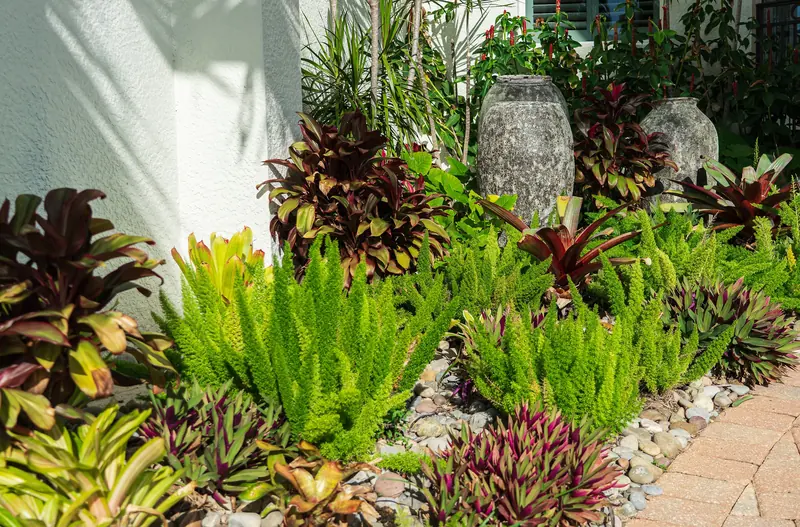
9. Build a cohesive look
Beyond survival, plants need to work together. A few principles help:
- Repeat a limited palette of plants across the property for consistency.
- Layer heights: groundcovers in front, shrubs in the middle, taller accents behind.
- Mix textures — fine ferns, broad tropical leaves and upright grasses.
- Use color deliberately, often in a few focused spots rather than everywhere.
10. Check community guidelines
Homeowners associations and condominium communities may have approved plant lists, height limits or requirements for street-facing areas. Check them before purchasing.
Putting it together
The best plant choices come from looking closely at each part of your yard: its light, exposure, soil and water, and the size the space can comfortably hold. If you are updating existing beds, our planting and landscape renovation service can help with selection and installation. For a larger project, start with landscape design and installation.